
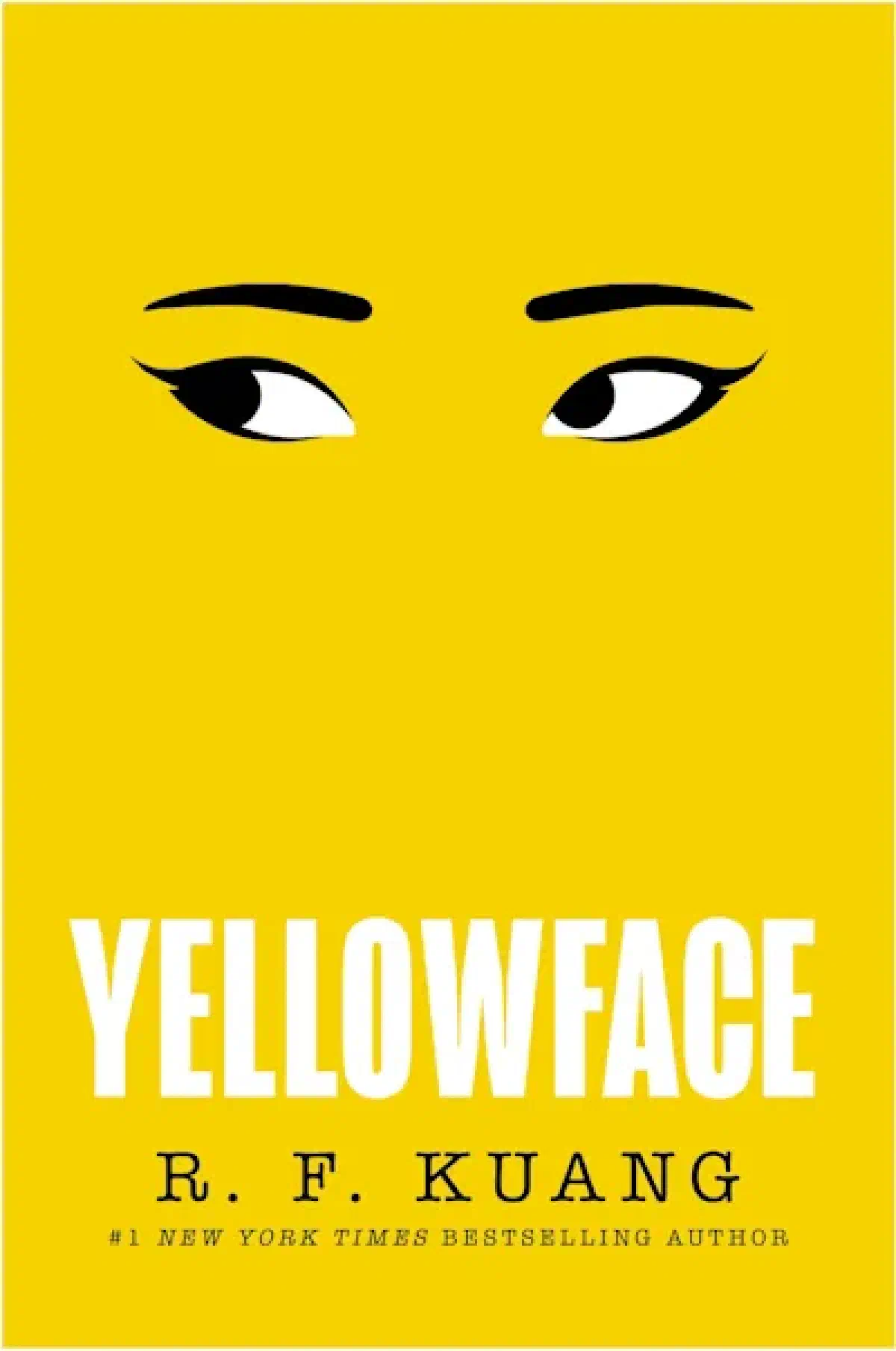
You know how everyone thinks Robert Downey Jr.’s character in Tropic Thunder is generally regarded as really funny and not racist despite the blackface? This book is like reading about the opposite version of that.
Yellowface revolves around two central characters, Juniper (June), our incredibly unlikeable protagonist, and Athena. Both are authors, however, Athena has substantially more success, having Netflix deals and being an international best seller, while Juniper struggles to barely make ends meet with her earnings. Despite that, they’re friends and hang out for drinks and food. On one of these outings, a series of unfortunate events happen, and Athena dies, while having just very conveniently shown June the manuscripts for her latest novel, which no one knows about, not even her publisher.
So what does June do in such a dire situation? Steal the manuscript and publish it as her own, obviously, but not without first editing it enough to where she feels comfortable telling herself it’s just as much hers as it is Athena’s.
The rest of the book very much reads as a sort of “monster of the week” show, where June is presented with a difficult situation which she must face head on, brought up mostly by the fact of being a white woman who suddenly “wrote” a very successful book centered around Asian culture. These situations just turn into complete trainwrecks, because she just handles every single situation in the worst way possible. June is definitely the type of character you love to hate, her racism is so apparent, even though she tries her hardest to convince herself she’s not.
Most of the book follows the same path, and, well, it ends on that same note, which I really liked, it was a very human ending, narcissistic people don’t tend to change when shown the error of their ways, rather, they double down and keep going on whatever path they had already decided was the best, which I thought was a very clever way to end the book.
So was the book fun? Yes. Did I like it? Also yes, but I didn’t love it. It’s certainly well written, and it’s very fast paced, each chapter just leaves you with enough of that cliffhanger feeling that you just want to keep reading the next one. This is all great, but I do feel like some of the themes that are explored in the book aren’t actually explored that deeply, which I think could have been fleshed out more. For instance, June’s relationship with her family presented an interesting family dynamic, where she’s (now) super successful after publishing Athena’s work, but they are completely oblivious to it and their interactions are just a loop of June trying to make them understand her struggles and them just diminishing her feelings. I would have loved to have these relationships fleshed out since some of these characters just felt very one-dimensional.
Something I think works both in favor and against the book is how modern it is, by that I mean that the protagonist is someone who is chronically online, and the book constantly references and makes emphasis on her struggles with reading about herself on social media like Twitter and Goodreads. I think this was more of a stylistic choice, which I liked.
On the other hand, I feel like those same references might make the book feel a bit dated, even now (Twitter is called X now, for example), and I do think that this reduces the potential audience for the book, older generations might not understand or just not care about why June is so obsessed with strangers’ opinions on the internet, and I also feel like even younger generations might not care, since they are also online all the time, but the concept of book publishing might be seen as some archaic, old-school thing that’s no longer relevant when you can just self publish on the internet nowadays without much trouble.
The author mentioned in an interview that she wanted the book to feel like an anxiety attack, while I’m not sure I feel that way, I can see where she’s coming from, with June just constantly doing the opposite of what a decent person would do. I also can’t help but wonder how much of what is portrayed in the book is the author personally inserting certain aspects of her life (albeit in an exaggerated way) in the story, which is fine, but it did make it feel a little to meta at times to me.
The best thing about the book is hands down the relationship between Athena and June, since Athena dies so early in the book, it makes their relationship extremely ambiguous, and we are left feeling that they weren’t friends so much as tools they each were using for their own benefit. Athena preyed on other peoples’ life stories (including June) to create her own narratives, while June pined for the life Athena had so she would let her invite her for drinks and food. It’s clear neither of the two were what we would describe as good people, but since June is herself an unreliable narrator, everything is up for grabs regarding how we choose to interpret their relationship.
Ultimately, I think this is a fun, quick read. While not everything the author did landed with me, it has its merits, it is well written, and does offer an interesting view into the modern publishing world which I don’t think many books dive into, even if in a fictional/exaggerated context. Kuang’s prose is easy to follow, and I’m definitely curious to read some of her other work, especially since everything else she’s written is Fantasy, I think it’ll be really interesting to see if her writing style is different when it comes to Fantasy or if there are stylistic differences.
Rating
⭐⭐⭐☆☆