
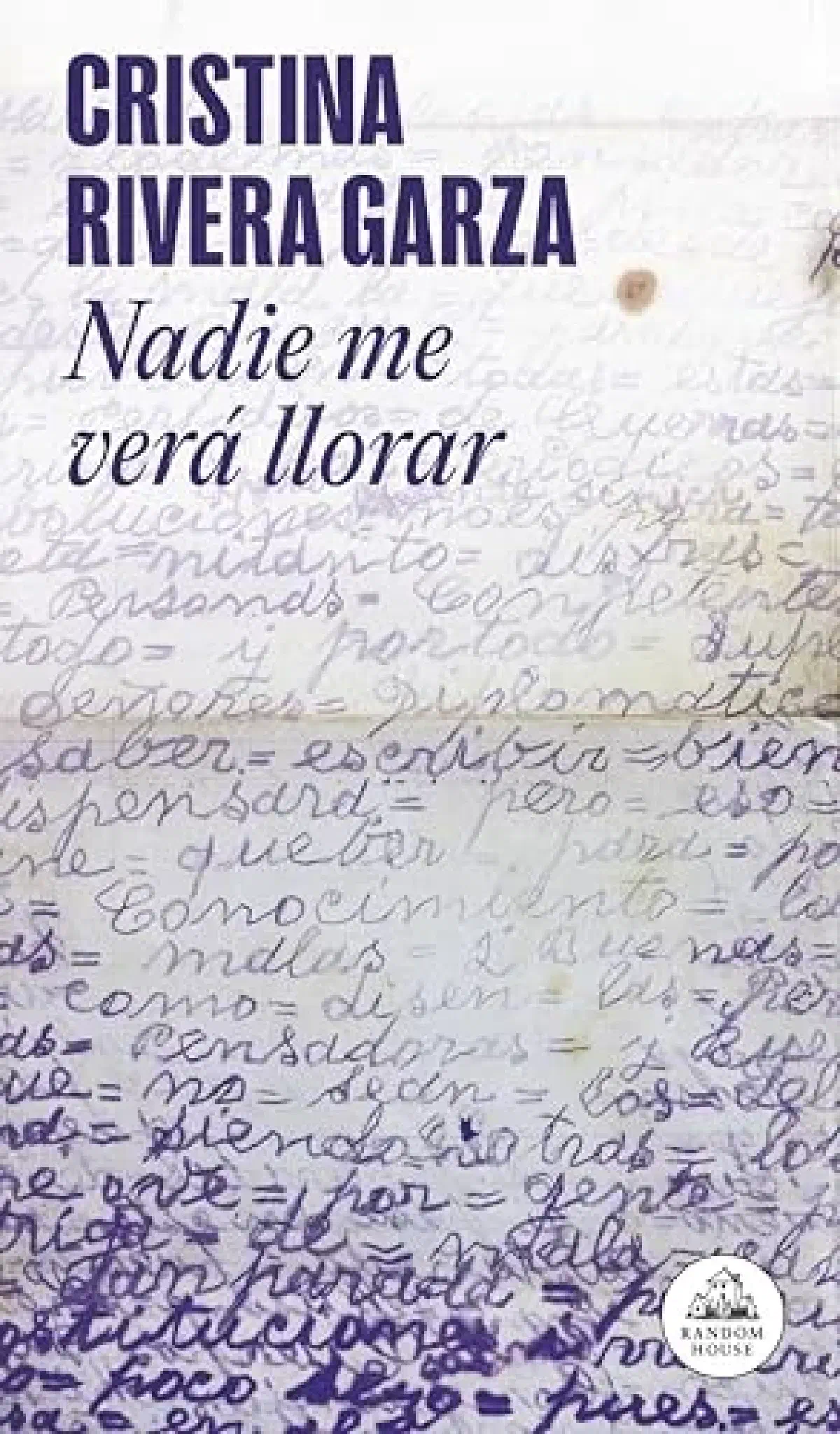
Cristina Rivera Garza came into my radar with the boom of her book El invencible verano de Liliana, her memoir revolving around the murder of her sister which also touches themes such as feminism and the big issue that are feminicides in Mexico. I haven’t read this book , but it’s in my TBR, so when Nadie me verá llorar was selected at my book club for our june read I was pretty excited about it.
Not going to lie to you, this was a hard read for me. I don’t know exactly why, but I really struggled to read this one during book club, I’m not really sure why. I think I was going through a reading slump or something, because the book felt like such a chore to get through. I felt the pacing very slow, the characters bland and one-dimensional, and the plot kind of non-existent. This was one of those books where you spend 10 minutes reading just a couple of pages and you’re not really retaining anything. If this review was based just on that first experience I had, my rating would consist solely of this paragraph and a final rating of 1 star, mayyyyybe 2. Fortunately for us (and the book, though I doubt Rivera Garza cares) I’m a firm believer of second chances, for better or for worse. In this case, it was for better.
My second go around was with the audiobook published in 2021, and I decided to take my time with it. The book centers around Joaquin Buitrago and Modesta Burgos, a photographer and a mental asylum patient, respectively. The narrative interweaves the past and present lives of both characters, mixing both with a healthy dose of “is this real or is this the character imagining things because they’re high on drugs and/or schizophenic?”. From a literary technical standpoint, this is a masterpiece. You have to really pay attention to everything because the narrative will go from a couple talking about their past to the present without a second’s notice, and if you’re not paying attention like I was on my first read, boy is it a rough ride. To be fair to my older self, the first 2 or 3 chapters were still pretty rough for me, the narrative style, as cool as it is, took me a good while to get used to and appreciate. Once I had the first few chapters out of the way I felt like I had finally gotten a grip on the book’s style and was starting to connect some dots. The novel also sprinkles some historical facts from the early 1900s Mexico, around the Porfiriato and the Cananea miner strike from 1906, key factors of the mexican revolution. These historical facts interspersed with the plot made me wonder more than once if I was reading a novel or an academic paper.
The central theme of the book is lunacy, memory, and power. Modesta is a patienet in a mental hospital, by virtue of this, we take everything she says with a grain of salt, but she lives her life with the purpose of being free by her own terms, not by depending on others. Similarly, Joaquin is a morphine addict, and his memories or recollections are equally untrustworthy, since most of them come when he’s high. This feeling of not being quite sure if what’s being presented to us is real or not gives the book a sort of flow, kind of like a wave, you go from thinking you understand what’s going on to then being presented new information that challenges what you had assumed as true before now being inaccurate. For example, both of the protagonists share a past love with another woman named Diamantina, and they both believed she had died a revolutionary hero in some riots, only to be presented by her death certificate towars the end of the book that showed she never dies before going to the revolution, she died a year before that, tainting the idea of her the book spent a good chunk of building up.
Most members of my book club felt similarly. My biggest issue is that the author spends a lot of time giving us long, drawn-out descriptions while I just wanted to get to the nitty gritty of the plot. At a certain point I just stopped caring about the scenery.
I feel like I might return to this book in the future, I feel like it’s the type of book that makes me change my perspective of it as I age. I’ll definitely check out more books by the author, the Iliac Crest and El invencible verano de Liliana will probably be what I tackle next from Rivera Garza, so stay tuned for those reviews.
Rating
⭐⭐⭐☆☆