
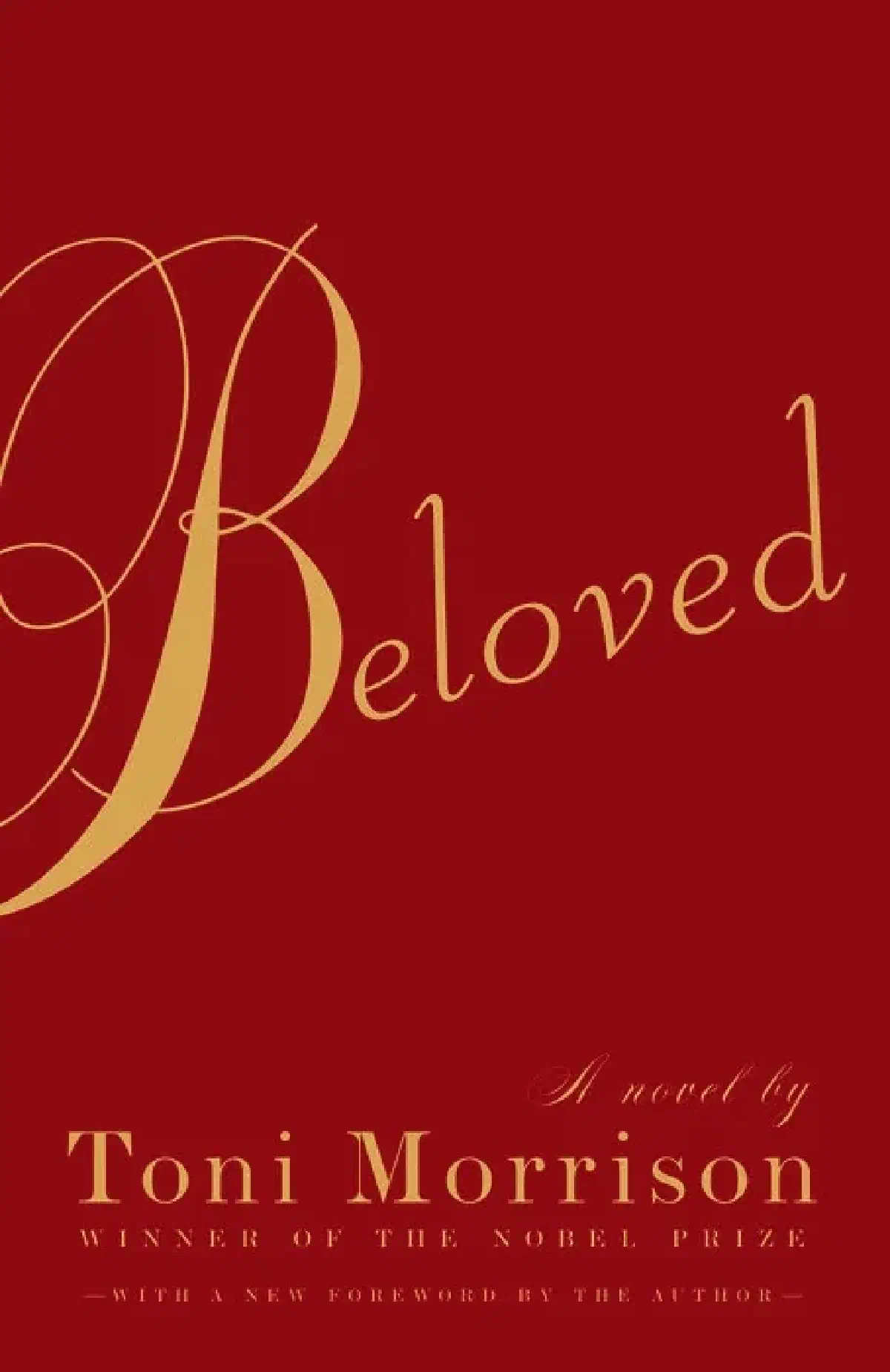
This was my first Toni Morrison book, and the expectations were incredibly high. I’d only ever read and heard good thing about Morrison’s writing, her beautiful and elegant prose, her sophisticated plot structures, and a myriad of other praises.
All that being said, my feelings towards ‘Beloved’, the book widely considered Morrison’s magnum opus, are complicated. I don’t think I’ve ever enjoyed a hard read this much. The difficulty of the book comes from various things:
- The multiple subject matters handled in the book: grief, loss, guilt, racism, slavery, and a lot more, all equally hard-hitting.
- The novel’s structure, we bounce around different points of view and timelines from one paragraph to the next, with no warning or hint that we’ve done so.
- The prose, which is beautiful and poetic, but can also be hard to follow.
- Magical realism, which isn’t something that makes reading the book difficult, per se, but it does keep you on your toes wondering if what the characters are seeing, feeling or even believing, are true.
As I read the novel I had to constantly take a step back to ponder on what I had read. I enjoyed the prose itself, but the constant back and forth with perspectives and timelines was a little rough, won’t lie. This kept me on my toes and forced me to read very carefully, which I hadn’t done in a while. This is both good and bad. Bad because even while paying attention, I just know there are many things I didn’t get. Good for the same reason, the re-readability of this novel is fantastic, I’m sure that if I were to re-read it again right now, having just finished it, I’d feel like I was reading a whole other novel. The content itself is that dense, in the best way possible.
As I grow older I’ve also grown to appreciate the more literary side of novels, and this one’s a doozy. Besides the hard-to-follow structure of the book itself, there’s a passage about two thirds of the way through the book which is Beloved’s inner monologue, and it’s just something out of this world. Incoherent sentences, many of them smushed together, with no real beginning or end, no punctuation, interwoven thoughts, feelings, and ideas. It made me uncomfortable, but at the same time I just had to keep reading, because I was just so enthralled with the way it all flowed. Despite the ramblings and confusing nature of the passage, it still flowed like poetry. This was a masterclass in writing from Toni Morrison.
It’s incredibly hard for me to describe what the book is, because it’s many things. At face value, it’s a book about an escaped slave who murders her own child to save her from returning to a life of slavery. However, like I said, it’s so much more than that, it’s a story about finding yourself, about growing, learning, being. It’s about living and letting go. It’s about love and the things we do because of love. And even with all that, the thing I take with me the most from reading this book, is how it made me feel, even when I wasn’t completely sure what it was that I was reading, I could feel the weight of the words, the feelings of the characters, the despair, the hope, the love, and the resentment.
My favorite quote from the book comes at practically the end, which is a pretty famous quote from the book, and with good reason:
“She is a friend of my mind. She gather me, man. The pieces I am, she gather them and give them back to me in all the right order.”
I think this might be my favorite description of love, even if you don’t understand the metaphor, you understand the feeling behind it. And in a book so dark, so depressing, to have this be what I’ve had in my head for a few days now after finishing the book, I think is pretty remarkable, and goes to show how deep the book is with its themes.
This book had nigh on impossibly high expectations, and it exceeded them.
Rating
⭐⭐⭐⭐⭐